he smell hit me first—green, sharp, a little like rain on hot stone. In a workshop in Beppu, a third-generation artisan named Sato was splitting a madake bamboo pole into four, then eight, then sixteen perfect strips. Each cut was a whisper. Each strip was destined for a kutori—a traditional bamboo basket woven so tightly it can hold water. Sato didn't look up. "Machines can't feel the grain," he said. "They break the fiber. Kutori is about following。not forcing."The word kutori itself is slippery. In the Oita dialect, it refers to the act of bending and twisting bamboo into functional curves—a technique refined over 400 years. But ask ten craftsmen and you'll get ten definitions. Some say kutori is the final knot that locks a rim;others insist it's the rhythmic sound the splitter makes against the workbench. What's consistent is the hand feel: kutori demands a callus on the thumb's outer edge。
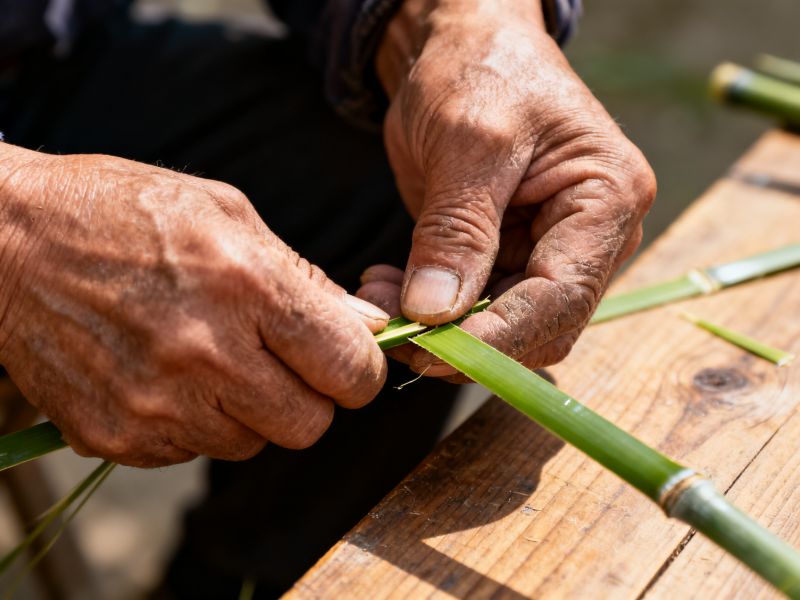
built over years of pressing wet bamboo. I watched a young apprentice, Kenji, fail nine times before his first kutori held tension without cracking. His hands shook. Sato just nodded and handed him another strip.Demand for kutori has collapsed. In 1985, Beppu had 212 bamboo workshops. Today, fewer than 30 remain。and only a handful still practice kutori properly. The reasons aren't mysterious: plastic baskets cost 300 yen;a kutori basket starts at 18,000 yen. Young people leave for Osaka and Tokyo. But there's a subtler loss—the sensory knowledge. A kutori master can judge bamboo age by the sound of the knife. That ear is disappearing. I asked Sato if he'd train a foreign apprentice. He laughed. "If they can sit still for three years, yes. Most can't."That's not just nostalgia talking. Architects and designers have started sourcing kutori panels for high-end interiors—the tight weave diffuses light like frosted glass but breathes. A Kyoto firm recently used 1,200 kutori strips to clad a hotel lobby;guests kept touching the walls. The commission saved two workshops. "We don't need pity," Sato told me, tapping a half-finished kutori base. "We need people who want something made by hands that remember." He paused. "And maybe a few more thumbs with calluses."If you ever find yourself in Beppu, skip the hot springs for an hour and visit a bamboo workshop. Ask to hold a kutori basket—really hold it. Feel the uneven tension where the weaver's fingers hesitated. That's not a flaw. That's the human record. The craft won't survive on government grants alone;it survives when someone chooses the 18,000-yen basket over the plastic one and understands why. Sato's apprentice Kenji?
He's still there. His tenth kutori didn't crack. It sold last month.